



A community storytelling series
Complete streets are designed and operated to prioritize safety, comfort, and access to destinations for all people who use the street, especially people who do not have and cannot drive cars and need other reliable forms of transportation to get around.
Complete streets make it easy to walk, bike, skate, and move actively with assistive devices like wheelchairs. Complete streets have adequate shade and vegetation. They allow buses to run on time and make it safe for people to walk or move actively to and from their chosen mode of transportation. Complete streets will create the pathways for our future generations to be able to get to the location they need without fearing how they will get there, how long it will take, and the negative exposures they must go through to be able to get to their destination.
Source: Smart Growth America
The Phoenix metro area is now the fastest growing in the country, and as the region continues to rapidly grow, so too are its environmental issues. The metro area’s air quality is now the fifth most polluted in the country, and the National Weather Service recorded 53 days in 2020 with temperatures above 110℉, setting a new record high. These worsening climate factors have had deadly consequences. Over the past five years, heat has been linked to more than 1,500 deaths in Arizona, with a particularly devastating impact on the unsheltered community in the state.
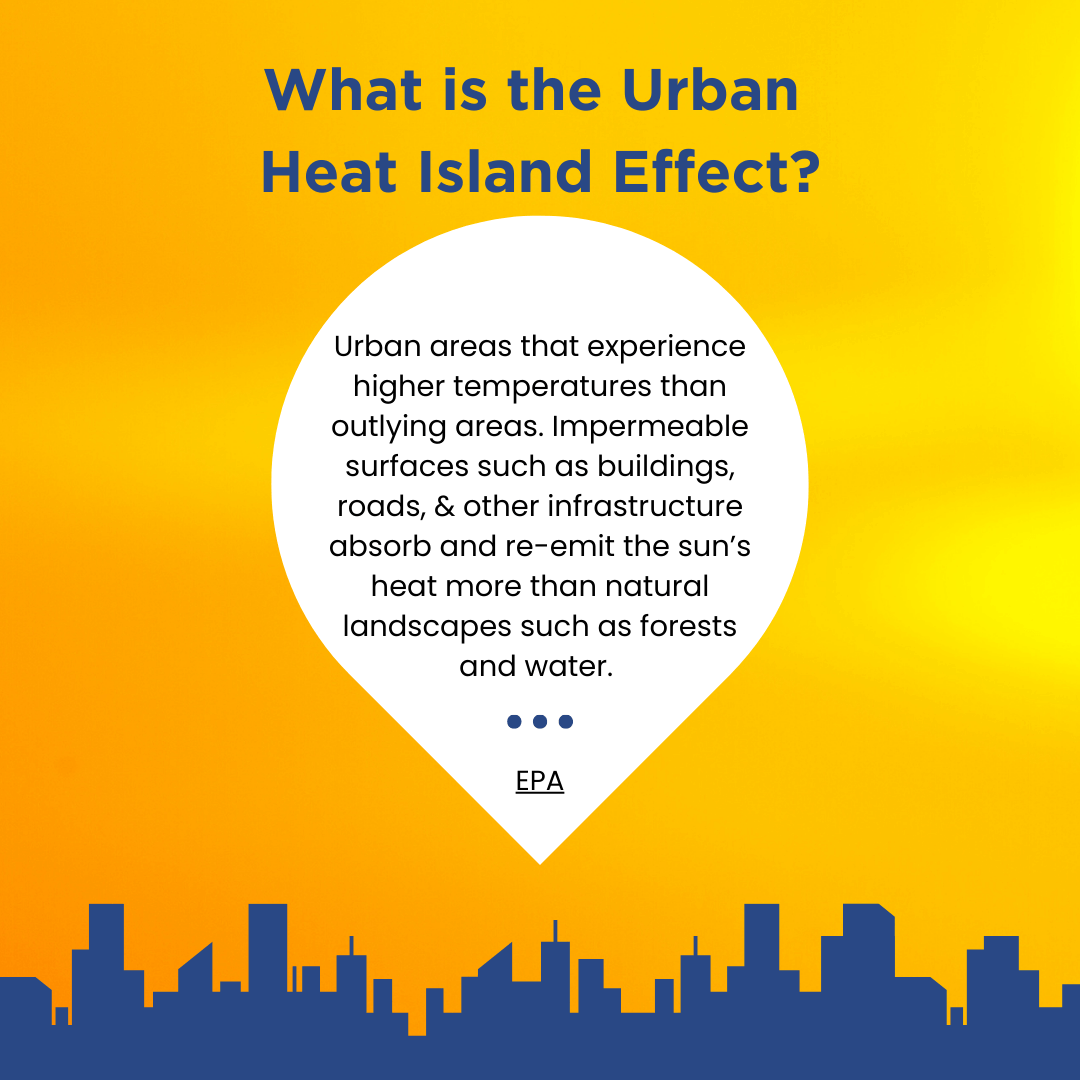
The desert is a naturally hot environment, but these changes in climate are being driven by human behavior. The increase in temperature is, in part, a result of the worsening urban heat island effect as the metro area continues to grow with a lack of urban green spaces and unchecked urban sprawl.
Cars, trucks, and other forms of transportation are one of the biggest producers of air pollution in our country, and particularly here in the valley where the ease of mobility is extremely dependent on owning a car.

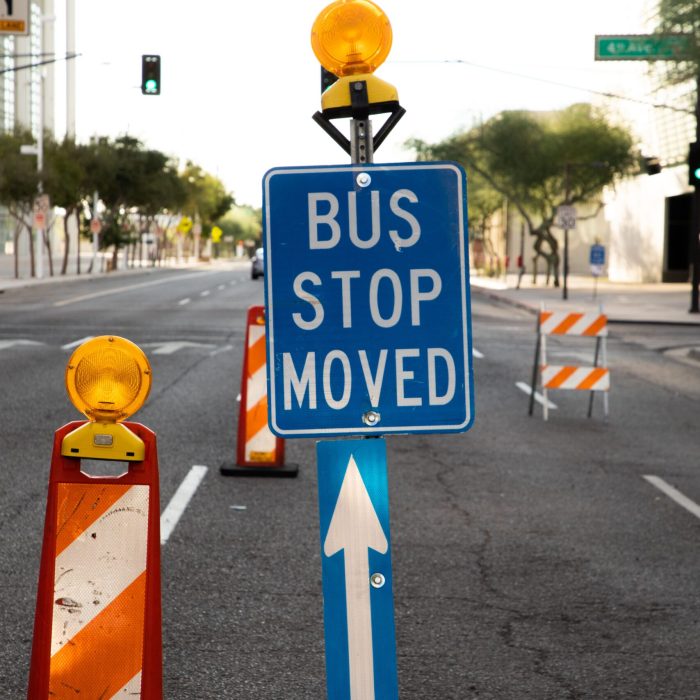
For those who cannot afford a car, a lack of reliable and extensive public transportation poses a significant barrier to working and getting around, leaving many residents to navigate a broken public transportation system.
Public transit options in our region need routes that depart more frequently during the day and night, transit stops that have adequate shading, and need to be more affordable. Our roads must be designed to accommodate more forms of active transportation, such as safe and dedicated bike lanes, barriers between the road and bike lanes, and tree shade cover. Ensuring access to reliable and clean transportation options supports the wellbeing of our communities.
To hear more from Phoenix public transit riders, you can view the results of Chispa AZ’s Clean & Green Campaign Public Transit Survey:

By pushing our elected officials and regional leaders to invest in 100% electric public transit and infrastructure, we can work to improve our air quality by having less vehicle emissions on our roads. Expanding and improving our public transportation system also has the potential to influence the culture of the area and how people choose to get around. By pushing to invest in public parks and trees, we will not only mitigate the urban heat island effect, but also provide more transit equity and options for our most impacted communities, particularly active transportation options like walking, biking, and skating. The solution for our region is complete streets.
We are demanding that Phoenix leaders and policymakers listen to the communities that depend on our public transit when making future transit and parks investments for our region. The following stories highlight the experiences of our community as they navigate Phoenox’s public transit system and public parks.
Complete Streets include adequate, accessible tree shade and urban green spaces.
Extreme heat in Phoenix has devastating impacts, particularly on our unsheltered neighbors. Many, who are unsheltered – like Cameron – are forced to seek heat relief at parks and risk criminalization.
Complete Streets include clean transit options, like electric buses. Complete streets means less tailpipe emissions on our roads.
As Phoenix’s air quality has worsened, Mayte’s respiratory illness has become more severe and difficult to manage.
Complete Streets include free transportation options to ensure mobility equity.
Many Phoenix residents struggle with the cost of public transit fare. As a student, Leah faces a financial burden to pay the bus fare.
Complete Streets include public transit that runs frequently and on time.
Sherito shares how infrequent and late public transit impacts her ability to get around Phoenix.
Complete Streets include public transportation options that accommodate all abilities.
Julian has a visual impairment and has difficulty navigating our public transit system.
Complete Streets include safe options for bikers, skaters, and pedestrians to get around.
Extreme heat and busy streets make it difficult for Jess to safely navigate Phoenix on their bike.
Complete Streets include public transportation routes that connect people to their destinations.
A lack of connectivity with public transit routes leave residents like Trinity struggling to reach their destination.
Complete Streets include affordable housing and services for unsheltered residents.
As the cost of rent increases in Phoenix, Jose shares his perspective on how gentrification impacts our community.
Complete Streets include safe and accessible parks for all members of our community.
Parks are vital for the health and wellness of communities; Vania shares her difficulties accessing local parks.
Complete Streets challenge the narrative that policing is the only method of public safety.
Investments in public transit and parks keep our communities safe. Chispa AZ Clean & Green Campaign Manager Sawsan explores the idea of reimagining public safety through the lens of environmental justice.
Chispa AZ
We firmly believe that the internet should be available and accessible to anyone, and are committed to providing a website that is accessible to the widest possible audience, regardless of circumstance and ability.
To fulfill this, we aim to adhere as strictly as possible to the World Wide Web Consortium’s (W3C) Web Content Accessibility Guidelines 2.1 (WCAG 2.1) at the AA level. These guidelines explain how to make web content accessible to people with a wide array of disabilities. Complying with those guidelines helps us ensure that the website is accessible to all people: blind people, people with motor impairments, visual impairment, cognitive disabilities, and more.
This website utilizes various technologies that are meant to make it as accessible as possible at all times. We utilize an accessibility interface that allows persons with specific disabilities to adjust the website’s UI (user interface) and design it to their personal needs.
Additionally, the website utilizes an AI-based application that runs in the background and optimizes its accessibility level constantly. This application remediates the website’s HTML, adapts Its functionality and behavior for screen-readers used by the blind users, and for keyboard functions used by individuals with motor impairments.
If you’ve found a malfunction or have ideas for improvement, we’ll be happy to hear from you. You can reach out to the website’s operators by using the following email
Our website implements the ARIA attributes (Accessible Rich Internet Applications) technique, alongside various different behavioral changes, to ensure blind users visiting with screen-readers are able to read, comprehend, and enjoy the website’s functions. As soon as a user with a screen-reader enters your site, they immediately receive a prompt to enter the Screen-Reader Profile so they can browse and operate your site effectively. Here’s how our website covers some of the most important screen-reader requirements, alongside console screenshots of code examples:
Screen-reader optimization: we run a background process that learns the website’s components from top to bottom, to ensure ongoing compliance even when updating the website. In this process, we provide screen-readers with meaningful data using the ARIA set of attributes. For example, we provide accurate form labels; descriptions for actionable icons (social media icons, search icons, cart icons, etc.); validation guidance for form inputs; element roles such as buttons, menus, modal dialogues (popups), and others. Additionally, the background process scans all the website’s images and provides an accurate and meaningful image-object-recognition-based description as an ALT (alternate text) tag for images that are not described. It will also extract texts that are embedded within the image, using an OCR (optical character recognition) technology. To turn on screen-reader adjustments at any time, users need only to press the Alt+1 keyboard combination. Screen-reader users also get automatic announcements to turn the Screen-reader mode on as soon as they enter the website.
These adjustments are compatible with all popular screen readers, including JAWS and NVDA.
Keyboard navigation optimization: The background process also adjusts the website’s HTML, and adds various behaviors using JavaScript code to make the website operable by the keyboard. This includes the ability to navigate the website using the Tab and Shift+Tab keys, operate dropdowns with the arrow keys, close them with Esc, trigger buttons and links using the Enter key, navigate between radio and checkbox elements using the arrow keys, and fill them in with the Spacebar or Enter key.Additionally, keyboard users will find quick-navigation and content-skip menus, available at any time by clicking Alt+1, or as the first elements of the site while navigating with the keyboard. The background process also handles triggered popups by moving the keyboard focus towards them as soon as they appear, and not allow the focus drift outside it.
Users can also use shortcuts such as “M” (menus), “H” (headings), “F” (forms), “B” (buttons), and “G” (graphics) to jump to specific elements.
We aim to support the widest array of browsers and assistive technologies as possible, so our users can choose the best fitting tools for them, with as few limitations as possible. Therefore, we have worked very hard to be able to support all major systems that comprise over 95% of the user market share including Google Chrome, Mozilla Firefox, Apple Safari, Opera and Microsoft Edge, JAWS and NVDA (screen readers).
Despite our very best efforts to allow anybody to adjust the website to their needs. There may still be pages or sections that are not fully accessible, are in the process of becoming accessible, or are lacking an adequate technological solution to make them accessible. Still, we are continually improving our accessibility, adding, updating and improving its options and features, and developing and adopting new technologies. All this is meant to reach the optimal level of accessibility, following technological advancements. For any assistance, please reach out to